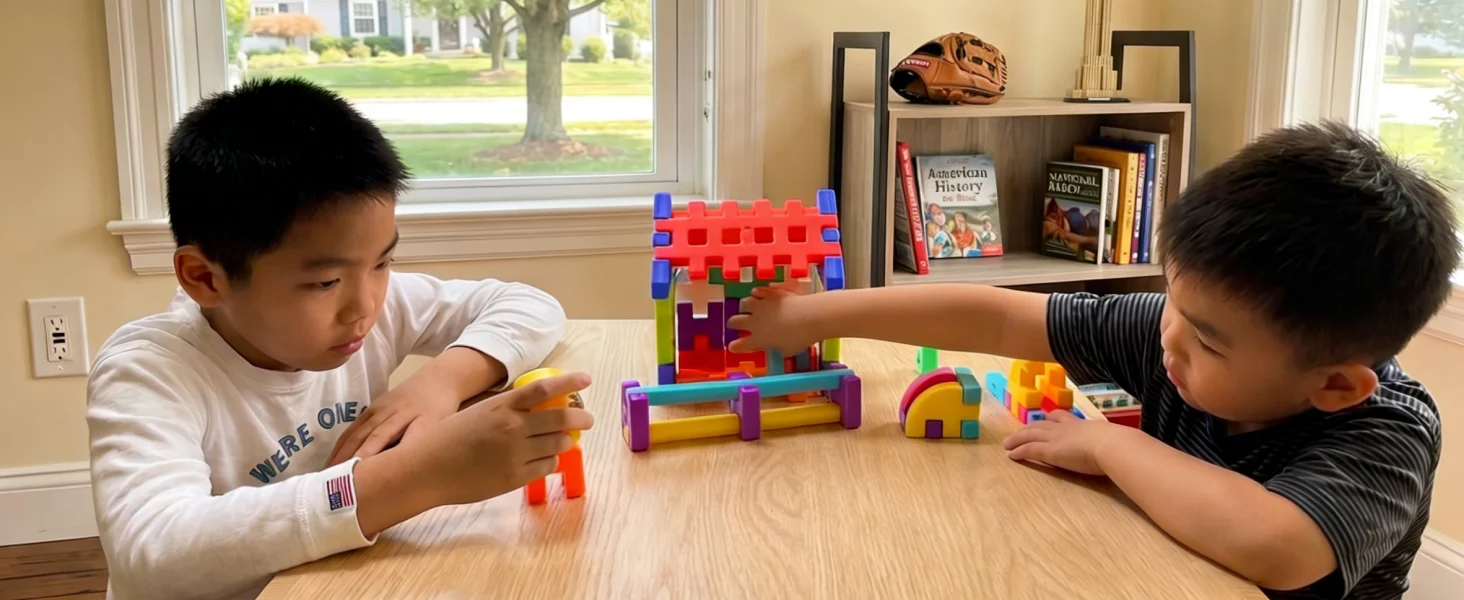
Building fine motor skills, one block at a time
How construction play strengthens little hands, sharpens focus, and creates natural moments for parent-child bonding—no screens required.
By XRUFY TeamXRUFY Journal
Every time a child picks up a block, lines up a piece, or presses two bricks together, they are not just building a tower—they are building fine motor control. Those small, precise movements are the same skills they will later use for writing, buttoning a coat, and tying shoelaces.
The beauty of open-ended building toys like XRUFY is that children practice these movements hundreds of times during a single play session, without ever feeling like they are doing "exercises." Play is the workout; the skills arrive as a side effect.
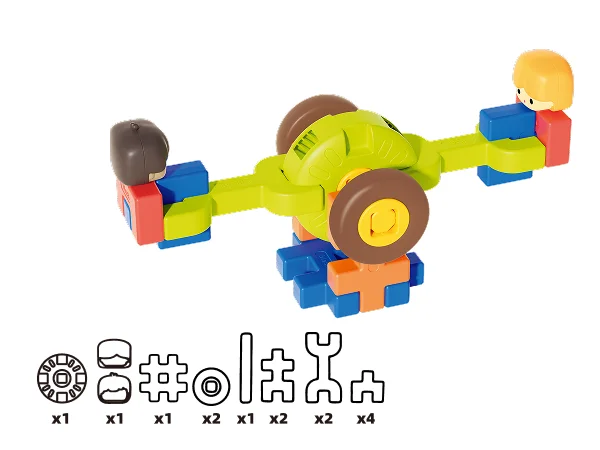
Why fine motor skills matter more than you think
Fine motor skills involve the coordination of small muscles in the hands, fingers, and wrists. In early childhood (ages 2–7), these skills are a foundation for independence:
| Everyday task | Fine motor skill involved |
|---|---|
| Holding a pencil | Pincer grip, wrist stability |
| Using scissors | Hand separation, bilateral coordination |
| Zipping a jacket | Finger strength, sequencing |
| Tying shoelaces | Precision, hand-eye coordination |
| Opening lunch containers | Palm arch, intrinsic muscle control |
Block play naturally strengthens all of these. When a child picks up a small XRUFY brick, they must coordinate thumb and forefinger (pincer grasp). When they press two pieces together, they engage the intrinsic hand muscles. When they rotate a piece to fit, they practice wrist rotation and bilateral coordination—using both hands together.
Seven minutes of block play can engage the hand more than an hour of passive screen time. The difference is active problem-solving versus passive consumption.
The parent-child connection: learning together
Building blocks are not just for solo play. When a parent sits alongside a child during a build, something remarkable happens: the child narrates their thinking. "This goes here because it is wider." "I need a blue one next." That running commentary is the foundation of executive function—planning, sequencing, and self-regulation.
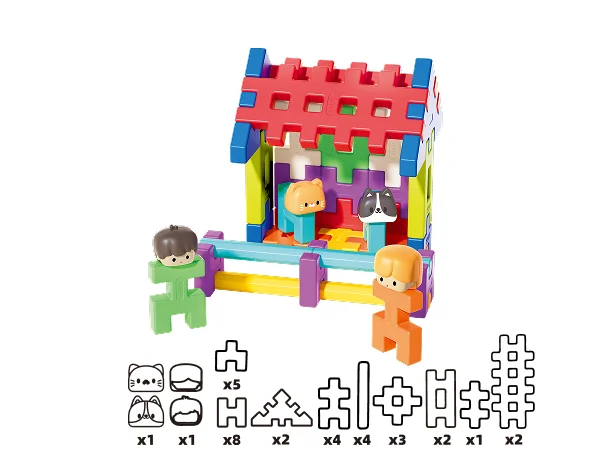
Three ways to turn block play into connection time:
- Parallel build — Sit beside your child with your own small pile of blocks. Comment on what you are building without directing theirs. "I am making a wide base so my tower does not tip." This models problem-solving without pressure.
- Story co-creation — Let your child introduce a character (a figure, a toy animal) and ask: "What does your character need in their house?" Follow their lead—even if the house has three doors and no roof.
- Celebrate the process — Instead of "Good job!" try "I noticed you tried three different pieces before you found one that fit. That's great problem-solving." This builds a growth mindset.
A simple guide to getting started
If you are new to open-ended block play, you do not need a curriculum or a lesson plan. Children are natural explorers—your role is to set the stage and step back.
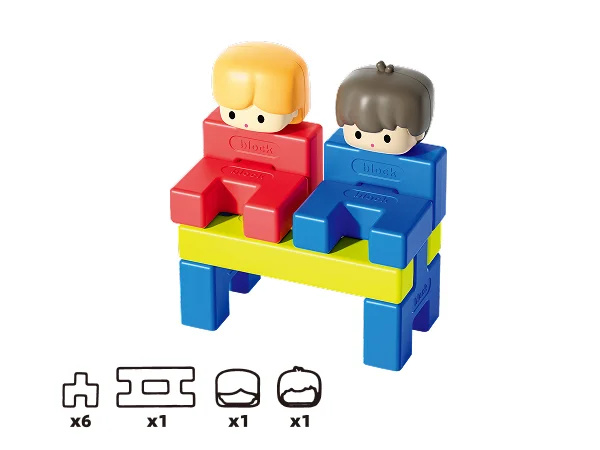
The five-minute setup:
- Choose a flat surface — A table or floor mat signals "this is where ideas happen."
- Put blocks in an open bin — Visibility invites action. When children can see the colorful pieces, they are far more likely to start building.
- Join without taking over — Sit for five minutes. Build something simple (a tower, a bridge). Let your child see you experimenting—making a wobbly stack, then widening the base.
- Follow the child's narrative — If they say "this is a rocket ship," it is a rocket ship. The goal is not a perfect structure; the goal is engaged imagination.
Watching skills grow over time
As children return to the same blocks again and again, you will notice their fine motor precision improving in real time:
- Age 2–3: Large grasping, stacking 2–4 blocks, knocking down with delight
- Age 3–4: More precise placement, connecting pieces intentionally, simple color sorting
- Age 4–5: Building recognizable structures, adding symmetrical details, using small pieces deliberately
- Age 5–7: Complex multi-step builds, following a mental plan, collaborating with others
Each stage builds on the last. A child who spends regular time with open-ended construction toys develops hand strength, spatial awareness, and creative confidence that transfers to every other area of learning.
The long view
What looks like "just playing" is actually a sophisticated learning process. Every block placed, every tower rebuilt, every shared laugh with a parent is wiring the brain for future success—in school, in relationships, and in the confidence to try hard things.
XRUFY's 100+ piece set is designed for exactly this kind of play: varied shapes that challenge the hands, bold colors that engage the eyes, and enough pieces for siblings or friends to build together. The skills will take care of themselves.
Ready to see the difference open-ended play can make?Browse the XRUFY collection or read more articles on our blog.