Beyond Stacking: Multidimensional Building Blocks
Make preschool building play more fun with XRUFY multidimensional blocks: build sideways, create 3D scenes and invent stories. Play ideas for ages 3 and up.
By XRUFY TeamXRUFY Journal
The tower is finished. Now your child wants to give it arms, make a doorway underneath it, or turn it into a home for a tiny character. That moment—when one idea becomes another—is where multidimensional building blocks can make play especially exciting.
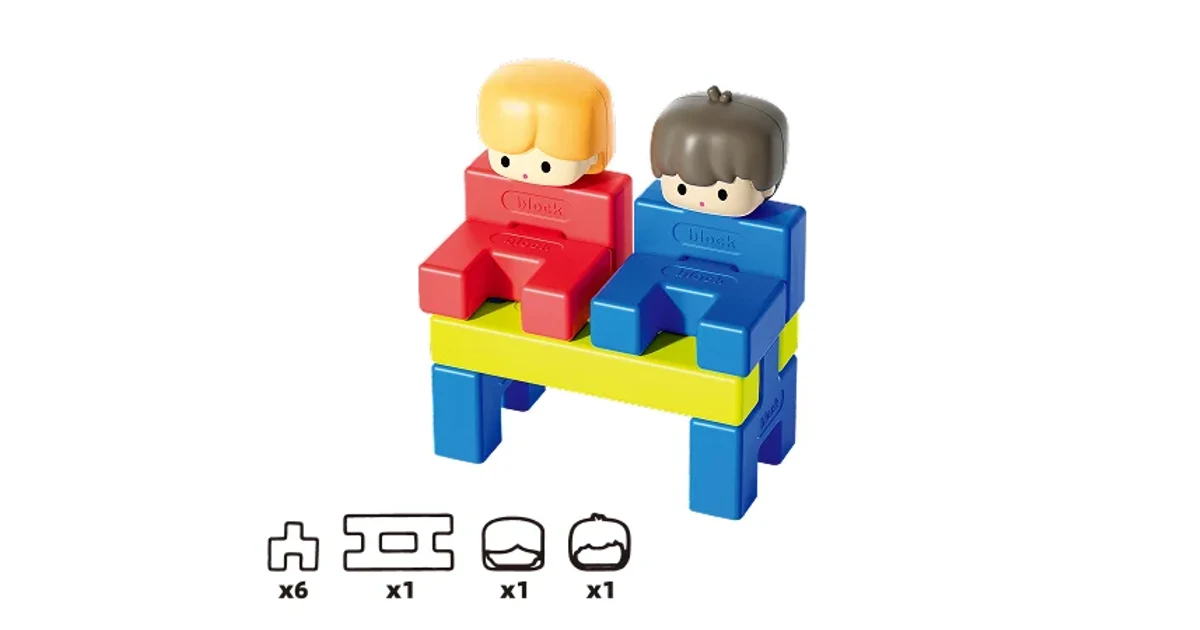
With XRUFY, preschool builders can explore connections that go upward, sideways and into three-dimensional shapes. A few pieces can become a little seat. Add a character and it becomes a bus stop. Build something beside it and a whole neighborhood begins.
For children ages 3 and up who love changing their creations, those extra directions give a familiar activity a fresh twist.
What are multidimensional building blocks?
“Multidimensional” describes the ways pieces combine into a structure. Children can build across as well as up, change the orientation of a piece, and assemble forms with height, width and depth.
The XRUFY product listing describes horizontal, vertical, curved, circular and interlocking pieces, along with character and pet figures. These elements invite children to explore both construction and pretend play. Check the selected set for its exact contents.
A child does not need to understand a technical term to enjoy this. The useful question is simply: “What happens if this piece goes here?”
Why it can be more fun than a stacking-only activity
Traditional stacking blocks are wonderful for towers, rows and balancing games. Many other construction toys also allow complex builds. Here, the comparison is with a simple activity of placing loose blocks on top of one another.
Multidirectional connections add a different kind of possibility. For a child who wants to keep transforming a model, that can be the most enjoyable part.
1. The next piece can take the build somewhere new
A tower suggests another level. A sideways connection might suggest an arm, a branch or the start of a bridge. Turning a piece changes the question from “How high?” to “What else could this become?”
Try beginning with a short row, then invite your child to add something that goes in a different direction. Let the result be surprising: a pretend animal with a very long tail is a perfectly good idea.
2. A small build can become a complete story
Young builders do not need a huge model to start playing. A seat and two characters are enough for a conversation, a picnic or a journey on an imaginary bus.
Ask, “Who is waiting here?” or “Where are they going?” The answer can suggest the next thing to build. A shelter, a doorway or a little garden grows out of the story rather than a requirement to finish a particular model.
3. Rebuilding becomes part of the game
When a child wants a wider seat or a taller entrance, changing the design gives the play a new direction. They can take a section apart, reconnect the pieces and see whether the new shape fits their idea.
That is the appeal of open-ended construction: the same pieces can return tomorrow as something entirely different. Whether it is more fun depends on the child, but there are plenty of new choices to try.
Three easy building ideas for preschoolers
Start with a small selection of pieces on a clear surface. Offer one idea, demonstrate a connection if needed, then leave room for your child to take over.
Build a seat for two
Create a small seat using the pieces available in your set. Add two characters and ask whether they both have a place to sit. Could the seat be wider? Does it need a back? Your child can decide whether it belongs in a park, a house or an imaginary vehicle.
The goal is a recognizable idea your child wants to play with, even if the shape is wonderfully unusual.
Make a funny creature
Begin with a simple body, then add parts in different directions. Invite your child to invent a name and explain how the creature moves. One long arm, a short tail or mismatched legs can become the best part of its story.
Use the connection points the pieces provide. If a join does not fit, rotate the piece or choose another one rather than forcing it.
Create a miniature meeting place
Make two small structures with a space between them. This could be a farmyard, a playground or a gathering place for the characters. Ask what the visitors need: somewhere to sit, an entrance, or a place for a pet?
Add one feature at a time. These are starting ideas to adapt to the pieces in your selected set, not a promise that every version makes every example.
Helping a younger builder get started
For a child new to interlocking blocks, the first satisfying moment may simply be joining two pieces and taking them apart again. Give that small discovery time.
- Show one connection slowly. Let your child see how the pieces line up before pressing them together.
- Offer a manageable choice. A few pieces can make it easier to choose what to try next.
- Build alongside them. Work on your own little creation and invite them to explain theirs.
- Follow their story. If the planned house becomes a creature, the play is still working.
- Pause when help is needed. Hold a base steady or demonstrate a join, then let your child continue.
These activities offer opportunities to practise aligning pieces, comparing shapes and making choices. They do not need to become a lesson or a race to finish. For more ideas, explore our article on hands-on building and fine motor practice.
Questions parents often ask
What age is XRUFY suitable for?
XRUFY is intended for children ages 3 and up. It contains small parts and is not suitable for children under 3. Follow the selected product’s age guidance and supervise young builders.
Does my child need to follow instructions?
A model can be a helpful starting point, but free building is welcome. Try a small shape first, then invite your child to change one part or add a character and a story.
Are these blocks compatible with other brands?
Do not assume that different connection systems fit together. Use the pieces from your XRUFY set and check the product information before trying to connect them with another brand.
Are multidimensional blocks always better than traditional blocks?
Different children enjoy different kinds of building. Loose stacking blocks are great for balance and knock-down games; interlocking pieces offer another way to connect and reshape a creation. If your child enjoys adding parts in different directions and inventing stories, multidimensional building is a playful next step.
Give the next idea somewhere to go
A row becomes a seat. A seat becomes a meeting place. A character arrives, and the next adventure needs a home. With multidimensional building blocks, a small connection can lead to a much bigger idea.
Explore XRUFY building toys, or view the current XRUFY set on Amazon to check the available option, contents and age guidance.